 English
 שפה עברית
  Kurdî
Kurdî  Español
  Português
  русский
  tiếng Việt
  ภาษาไทย
  Malay
Malay  Türkçe
  العربية
  فارسی
فارسی  Burmese
  Français
  日本語
日本語  Deutsch
  Italiano
  Nederlands
  Polski
  한국어
한국어  Svenska
  magyar
  বাংলা ভাষার
  Dansk
Dansk  Suomi
Suomi  हिन्दी
  Pilipino
  Gaeilge
  Indonesia
  Norsk
Norsk  تمل
تمل  český
český  ελληνικά
  український
  Javanese
  தமிழ்
தமிழ்  తెలుగు
  नेपाली
  български
  ລາວ
ລາວ  Latine
  Қазақша
  Euskal
  Azərbaycan
  Slovenský jazyk
  Македонски
  Lietuvos
  Eesti Keel
  Română
  Slovenski

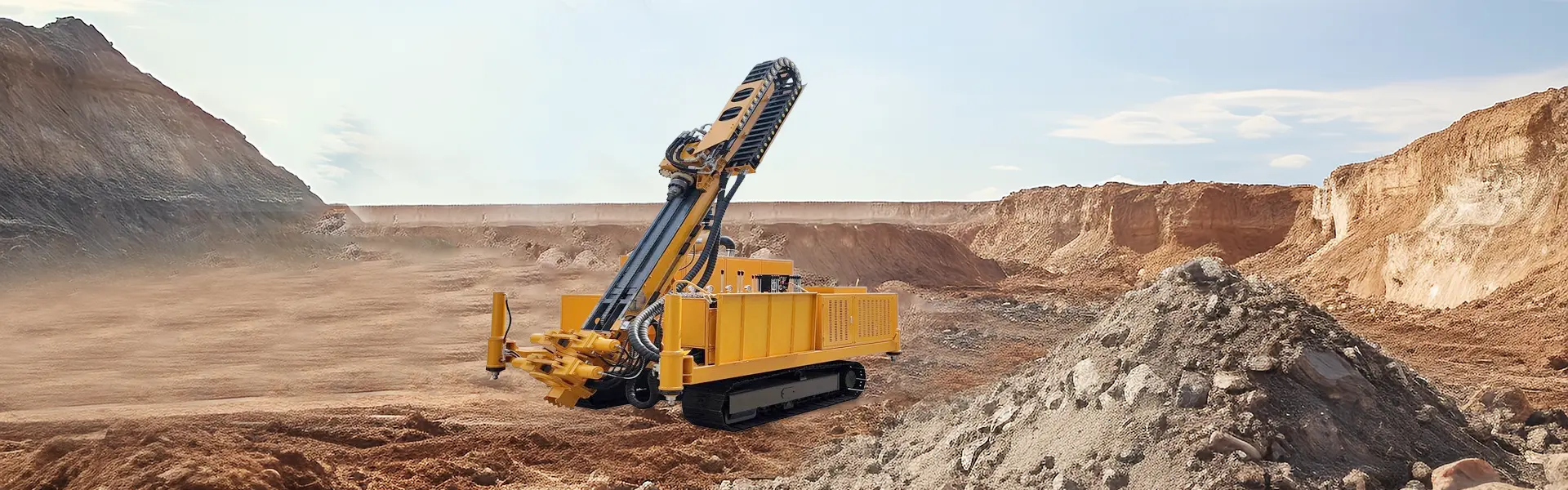
What Are the Different Types of Mining Drilling Rigs for Exploration?
What Are the Different Types of Mining Drilling Rigs for Exploration?
Mineral exploration is a complex and sequential process aimed at locating economically viable ore deposits. The cornerstone of this process is drilling, which provides the physical samples necessary for geological analysis and resource estimation. The selection of an appropriate mining drilling rig is critical, as it directly impacts the quality of data, operational efficiency, and project economics. Various drilling techniques are employed, each with distinct advantages tailored to specific geological conditions, depth requirements, and sample integrity needs. Understanding the different types of rigs is the first step in designing a successful exploration program.
The most common type of rig encountered in early-stage exploration is the Rotary Air Blast (RAB) rig. This system utilizes high-pressure air to flush cuttings from the hole and is typically mounted on a light truck or tracked vehicle. RAB drilling is recognized for its rapid penetration rates in soft to moderately hard rock, making it ideal for widespread reconnaissance and shallow cover stripping. However, the sample quality can be compromised due to contamination from the walls of the hole as the cuttings are blown to the surface. Consequently, data from RAB drilling is often used for preliminary target generation rather than definitive resource calculation. Following RAB, Air Core (AC) drilling offers a step up in sample quality. It uses a hollow, face-sampling bit with dual-wall drill rods, and compressed air transports the sample to the surface through the inner tube. This method provides more reliable and less contaminated samples than RAB, making it suitable for sampling weathered and soft rock profiles.
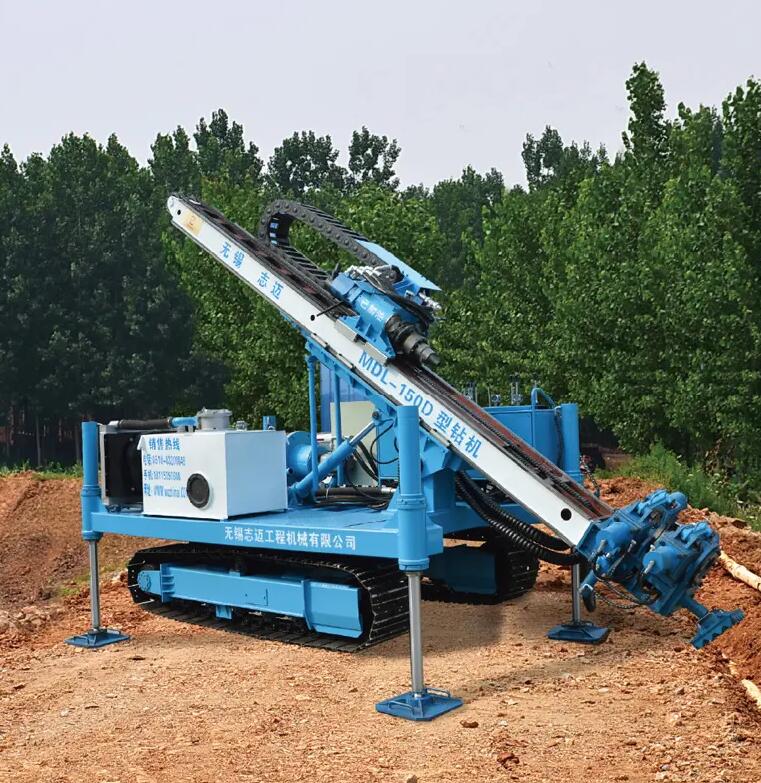
For more definitive resource evaluation, two primary methods dominate: Reverse Circulation (RC) and Diamond Core drilling. An RC mining drilling rig employs a pneumatic reciprocating piston (a hammer) that strikes down on a tungsten-carbide button bit. The cuttings are forced up the center of the drill rods inside a continuous inner tube, contained within a closed system, which minimizes cross-contamination. This technique delivers representative, chip-style samples that are excellent for grade control and bulk sampling. RC drilling is faster and often more cost-effective than core drilling for a given meterage, but it does not provide a continuous, intact rock sample. In contrast, a Diamond Core mining drilling rig recovers a solid cylinder of rock, known as a core, using a diamond-impregnated drill bit. This core provides a continuous, undisturbed geological record, allowing geologists to examine rock structures, mineralogy, textures, and precise geological contacts. Core drilling is indispensable for detailed geological modeling, geotechnical studies, and metallurgical testing.
Beyond these primary methods, specialized systems address unique challenges. Down-The-Hole (DTH) drilling, while often a component of RC systems, can also be a primary method for large-diameter blasthole drilling in open pits or for water wells. It is highly effective in hard rock formations. Sonic drilling represents a more advanced, though costly, alternative. This technique uses high-frequency resonance to fluidize the soil and rock around the drill string, allowing for continuous core samples to be retrieved in both unconsolidated and hard rock formations with exceptional speed and sample quality. The choice between these systems involves a careful trade-off. Factors such as geological complexity, required sample type, depth objectives, budget constraints, and environmental conditions all influence the selection of the most suitable mining drilling rig for the task at hand.
The evolution of drilling technology continues to enhance exploration capabilities. Modern mining drilling rig platforms are increasingly automated and digitally integrated. They feature advanced onboard computer systems that monitor and record drilling parameters like penetration rate, torque, and pressure in real-time. This data provides immediate insights into changing ground conditions, helps optimize drilling performance, and contributes to a richer geological model. Furthermore, the industry is moving towards rigs with lower environmental footprints, including electric and hybrid power options that reduce emissions and noise, which is particularly important for operations near communities or in ecologically sensitive areas.
Send Inquiry



X
We use cookies to offer you a better browsing experience, analyze site traffic and personalize content. By using this site, you agree to our use of cookies.
Privacy Policy