 English
 שפה עברית
  Kurdî
Kurdî  Español
  Português
  русский
  tiếng Việt
  ภาษาไทย
  Malay
Malay  Türkçe
  العربية
  فارسی
فارسی  Burmese
  Français
  日本語
日本語  Deutsch
  Italiano
  Nederlands
  Polski
  한국어
한국어  Svenska
  magyar
  বাংলা ভাষার
  Dansk
Dansk  Suomi
Suomi  हिन्दी
  Pilipino
  Gaeilge
  Indonesia
  Norsk
Norsk  تمل
تمل  český
český  ελληνικά
  український
  Javanese
  தமிழ்
தமிழ்  తెలుగు
  नेपाली
  български
  ລາວ
ລາວ  Latine
  Қазақша
  Euskal
  Azərbaycan
  Slovenský jazyk
  Македонски
  Lietuvos
  Eesti Keel
  Română
  Slovenski

How to Select a Mining Drilling Rig for Surface vs. Underground Operations?
How to Select a Mining Drilling Rig for Surface vs. Underground Operations?
The selection of a mining drilling rig is a strategic decision that fundamentally shapes the efficiency, safety, and cost structure of a mining operation. This choice is heavily influenced by the mining method: surface or underground. The two environments present vastly different constraints and requirements, necessitating distinct rig designs and capabilities. A rig perfectly suited for a large open-pit mine would be impractical and unsafe in the confined spaces of an underground decline. Therefore, the selection process must carefully evaluate factors such as spatial limitations, power sources, drill hole objectives, mobility, and ventilation.
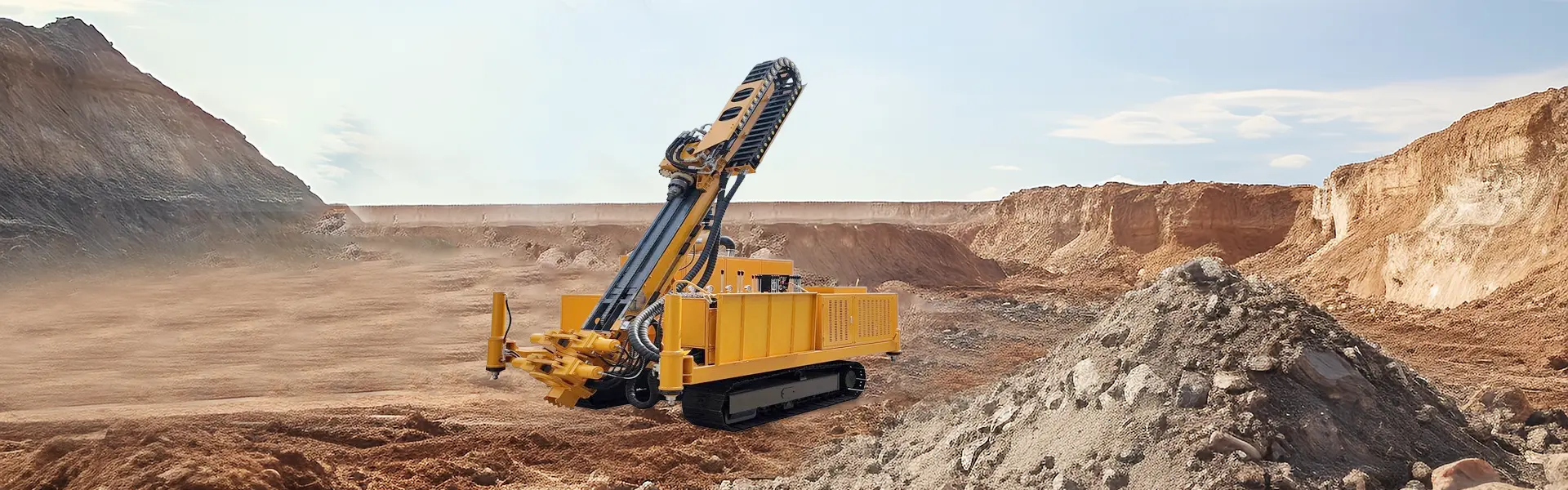
For surface mining operations, such as open-pit mines, the primary application for a mining drilling rig is blasthole drilling. These rigs are designed to drill large-diameter holes (typically 6 to 16 inches) in a pre-defined pattern to fragment the rock for excavation. Surface rigs are characterized by their large size, high capacity, and self-sufficient mobility. They are often mounted on crawler tracks or large truck carriers to navigate the rough terrain of a mine bench. Power is typically supplied by a high-horsepower diesel engine, and they generate substantial pulldown force and rotational torque to penetrate hard rock formations. The most common types are Rotary Blasthole Rigs, which use tri-cone bits and compressed air for cuttings removal, and Down-The-Hole (DTH) Rigs, where the hammer is located at the bottom of the hole, making them more efficient in very hard, abrasive rock.
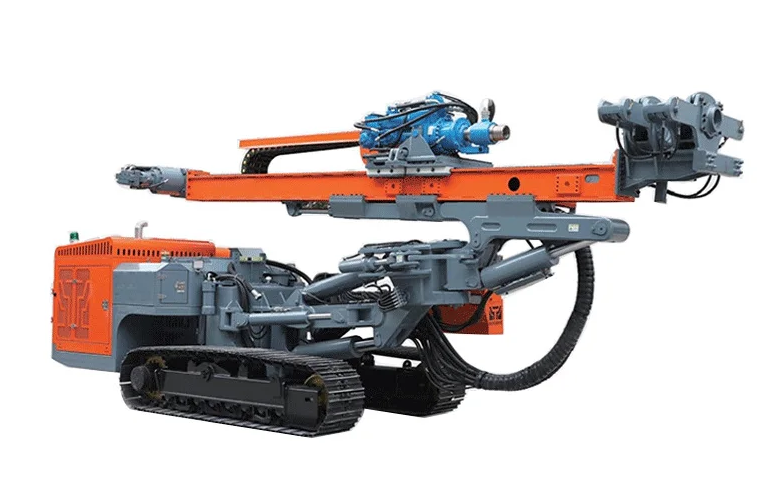
In contrast, the underground mining environment imposes severe physical constraints. A mining drilling rig for underground use must be compact, low-profile, and highly maneuverable to operate in narrow drifts and tunnels. These rigs, often called "jumbos," are primarily used for development drilling (creating new tunnels), production drilling (drilling blastholes for ore extraction in stopes), and bolting for ground support. Due to ventilation limitations and the enclosed space, diesel engines are often replaced with electric motors or are equipped with advanced diesel particulate filters (DPFs) and scrubbers. Hydraulic systems are designed for precision and control rather than raw power. A key feature of many underground mining drilling drilling rigs is their modularity, often consisting of multiple booms that can operate independently to drill a pattern of holes from a single setup.
The technical specifications and operational focus diverge significantly between the two categories. A surface mining drilling rig prioritizes drilling speed and meterage to keep up with the high production rates of a large-scale pit. Automation features, such as auto-leveling, drill plan navigation, and automated rod handling, are increasingly common to enhance productivity and operator safety. The focus is on volume and consistent performance in a relatively open environment. For an underground mining drilling rig, the emphasis is on precision, flexibility, and safety. Advanced rigs feature computer-controlled drilling that allows the operator to program the exact hole angle, depth, and alignment for a perfect blast pattern or rock bolt installation. This precision is critical for maintaining tunnel stability and optimizing ore recovery while minimizing dilution.
The final selection must also consider long-term operational costs and the specific ore body geometry. For a surface mine with a long life, investing in a large, automated, and expensive mining drilling rig can be justified by its high productivity and reliability. For a narrow-vein underground mine, a smaller, more versatile rig that can be easily relocated and adapted to changing geology is a more appropriate choice. The decision is never based on the rig alone but on how well the mining drilling rig integrates with the overall mine plan, the haulage system, and the geotechnical requirements of the deposit. A thorough analysis of these factors ensures the selected rig will be a productive and safe asset throughout its service life.
Send Inquiry



X
We use cookies to offer you a better browsing experience, analyze site traffic and personalize content. By using this site, you agree to our use of cookies.
Privacy Policy