 English
 שפה עברית
  Kurdî
Kurdî  Español
  Português
  русский
  tiếng Việt
  ภาษาไทย
  Malay
Malay  Türkçe
  العربية
  فارسی
فارسی  Burmese
  Français
  日本語
日本語  Deutsch
  Italiano
  Nederlands
  Polski
  한국어
한국어  Svenska
  magyar
  বাংলা ভাষার
  Dansk
Dansk  Suomi
Suomi  हिन्दी
  Pilipino
  Gaeilge
  Indonesia
  Norsk
Norsk  تمل
تمل  český
český  ελληνικά
  український
  Javanese
  தமிழ்
தமிழ்  తెలుగు
  नेपाली
  български
  ລາວ
ລາວ  Latine
  Қазақша
  Euskal
  Azərbaycan
  Slovenský jazyk
  Македонски
  Lietuvos
  Eesti Keel
  Română
  Slovenski

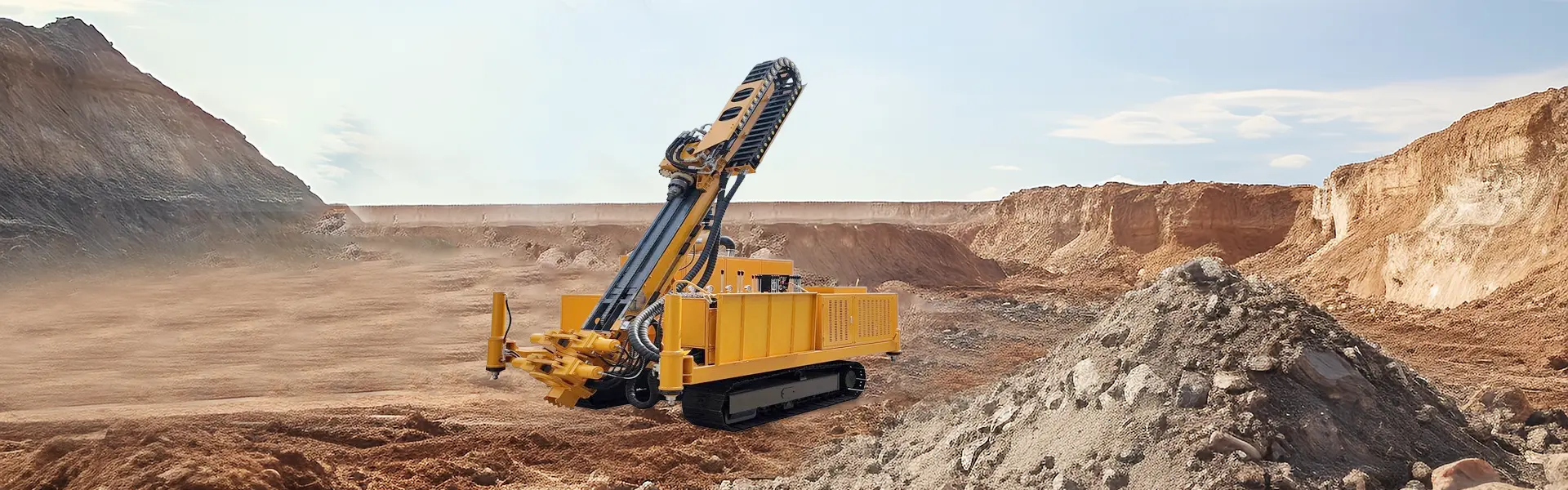
What's the Difference Between an Anchoring Rig and a Standard Drilling Rig?
What's the Difference Between an Anchoring Rig and a Standard Drilling Rig?
While both anchoring rigs and standard drilling rigs create boreholes in the ground, their design philosophy, core capabilities, and end goals differ significantly. A standard drilling rig is primarily optimized for exploration or extraction—to penetrate the ground efficiently and retrieve a sample or access a resource. An anchoring rig, however, is engineered for construction and reinforcement—to create a precisely located, high-integrity hole that will become a permanent, load-bearing structural element. This fundamental purpose drives divergences in their power, precision, versatility, and ancillary functions.
The most apparent difference lies in precision and guidance systems. A standard exploration or water well drill rig prioritizes verticality and reaching target depth. An anchoring rig, especially for soil nailing, tiebacks, or micropiles, must often drill at precise, non-vertical angles (sometimes horizontal or upward). Therefore, anchoring rigs are equipped with sophisticated leader systems or mast guides. These are rigid beams with precise angular and azimuth controls, allowing the driller to set and maintain the exact design inclination and alignment. This is crucial for ensuring the anchor is installed in the correct orientation to resist calculated loads. Standard rigs may lack this fine angular control.
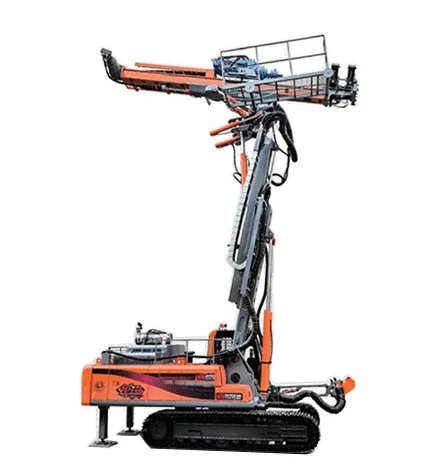
Power and Feed Force requirements also differ. Anchoring rigs are designed for versatility within challenging, near-surface conditions. They require high pull-down (crowd) force and retraction force. This is necessary not just for drilling but for forcefully driving casings through obstructions, overcoming the high friction of cohesive soils, and reliably extracting the drill string from deep, potentially unstable holes. They also need high torque at low rotational speeds for tasks like casing oscillation or drilling in hard formations. Standard rotary rigs for mineral exploration may prioritize high rotational speeds over extreme crowd force, as they are often drilling smaller-diameter holes in deeper, more stable rock formations.
The versatility in drilling methods is a hallmark of dedicated anchoring rigs. As ground conditions on a slope or excavation face can change rapidly, a modern anchoring rig is a multi-functional platform. It can seamlessly switch between, for example, a top hammer for rock, a continuous flight auger for soil, and a duplex (casing-while-drilling) system for loose overburden—all from one carrier. This adaptability is built into its hydraulic and control systems. A standard water well or geotechnical investigation rig is typically specialized for one primary method (e.g., rotary mud drilling or sonic coring) and is less adaptable to sudden changes without significant reconfiguration.
Ancillary Equipment Integration is another key differentiator. An anchoring rig is often a self-contained work station. It will have an integrated grout plant (mixer and pump) to immediately fill the anchor hole after drilling. It features strong winches and guide arms for handling and inserting long, flexible tendon strands into the hole without damage. Some have onboard compressed air systems for down-the-hole hammers and hole cleaning. A standard drilling rig's goal is to make a hole and retrieve a sample; it lacks these integrated systems for anchor installation. Grouting, if needed, is done with separate, mobilized equipment.
Finally, the carrier and Site Mobility are designed for different terrains. Anchoring rigs are predominantly used on active construction sites, often on unstable or steep slopes. Therefore, they are almost exclusively mounted on crawler tracks that provide stability on uneven ground, low ground pressure, and excellent maneuverability in tight spaces. Standard drilling rigs for water or exploration can be truck-mounted, trailer-mounted, or on simpler tracks, prioritizing highway mobility and setup speed over the extreme terrain capability needed on a cut slope.
In summary, a standard drilling rig is a specialist in making a hole for information or resource access. An anchoring rig is a specialist in creating a structural element. It is a more robust, precise, and integrated machine built to handle the unpredictable and demanding conditions of construction sites. It trades some raw depth capability for superior control, power for casing, and built-in functionality for the complete anchor installation cycle. Choosing the wrong type of rig for an anchoring project can lead to poor hole quality, misaligned anchors, installation failures, and significant cost overruns, highlighting the importance of selecting the purpose-built tool for the job.
Send Inquiry



X
We use cookies to offer you a better browsing experience, analyze site traffic and personalize content. By using this site, you agree to our use of cookies.
Privacy Policy