 English
 שפה עברית
  Kurdî
Kurdî  Español
  Português
  русский
  tiếng Việt
  ภาษาไทย
  Malay
Malay  Türkçe
  العربية
  فارسی
فارسی  Burmese
  Français
  日本語
日本語  Deutsch
  Italiano
  Nederlands
  Polski
  한국어
한국어  Svenska
  magyar
  বাংলা ভাষার
  Dansk
Dansk  Suomi
Suomi  हिन्दी
  Pilipino
  Gaeilge
  Indonesia
  Norsk
Norsk  تمل
تمل  český
český  ελληνικά
  український
  Javanese
  தமிழ்
தமிழ்  తెలుగు
  नेपाली
  български
  ລາວ
ລາວ  Latine
  Қазақша
  Euskal
  Azərbaycan
  Slovenský jazyk
  Македонски
  Lietuvos
  Eesti Keel
  Română
  Slovenski

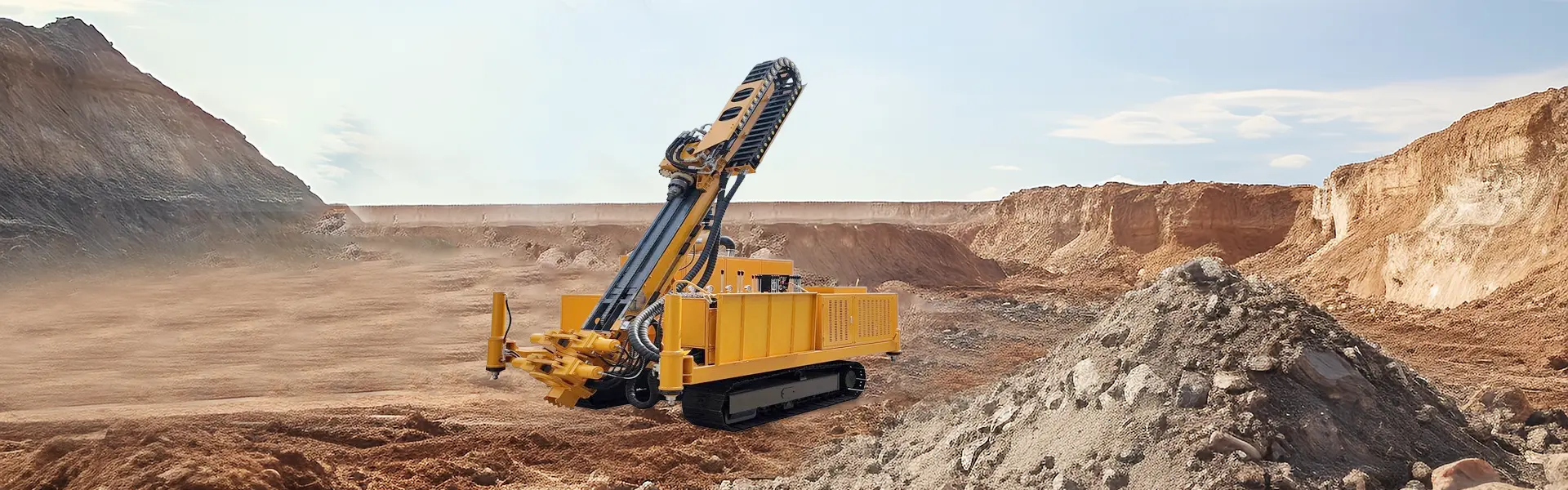
How Does a Multi-functional Anchoring Drilling Rig Handle Different Soil Conditions?
How Does a Multi-functional Anchoring Drilling Rig Handle Different Soil Conditions?
In the complex world of geotechnical engineering and construction, soil is not a uniform material but a highly variable medium. Successfully installing anchors, piles, or conducting soil sampling requires technology that can adapt on the fly. This is where the multi-functional anchoring drilling rig proves its worth. Unlike single-method rigs, it is an engineering chameleon, equipped with a versatile arsenal of tools and techniques to tackle everything from loose sand to solid bedrock.
The core of its adaptability lies in its modular design and powerful hydraulic or electric drive systems. These rigs can be fitted with various drilling tools and utilize different drilling methods, allowing operators to select the optimal configuration for the encountered ground. The process begins with a thorough review of the geotechnical investigation report. This data informs the initial choice of drilling method, drill string, and tooling, but the rig's true intelligence is its ability to adjust in real-time based on performance and the cuttings being brought to the surface.
When dealing with unconsolidated or loose soils, such as sand, silt, or backfill, the primary challenge is borehole collapse. Here, the rig typically employs the Direct Mud Circulation (DMC) method. A special drilling fluid (bentonite slurry or polymer mud) is pumped down through the hollow drill rod and out of the drill bit. This fluid serves a dual purpose: it cools the bit and, more critically, exerts hydrostatic pressure on the borehole walls. The fluid forms a thin, impermeable filter cake, stabilizing the hole and preventing cave-ins. In some cases, casing systems are mechanically advanced simultaneously with drilling to provide temporary structural support through these unstable layers.
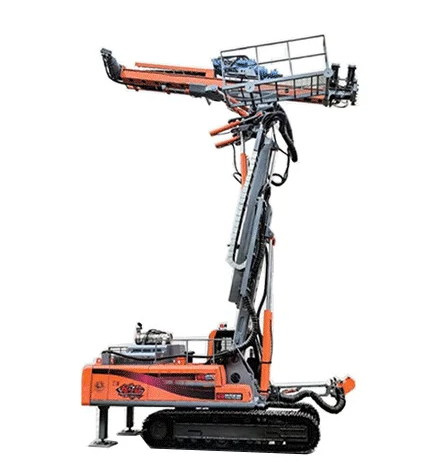
For cohesive soils like clay and silt, the approach varies with consistency. Stiff clays can be drilled using simpler methods like auger drilling with a continuous flight auger, which effectively removes the spoil. However, in soft, water-sensitive clays that can smear or become plastic, the rig might switch to techniques that minimize disturbance. Air Rotary Drilling with a down-the-hole hammer (DTH) can be effective if the clay is not too wet, using compressed air to cool the bit and flush cuttings. Alternatively, cased drilling with an oscillator or rotator is often used to advance a temporary steel casing ahead of the drill bit, ensuring a clean, stable borehole with minimal wall smear, which is crucial for achieving good grout-to-soil bond in anchors.
The most demanding conditions are rock formations. To penetrate hard rock, multi-functional rigs primarily utilize Top Hammer or Down-The-Hole (DTH) Hammer methods. In Top Hammer, a hydraulic hammer at the top of the drill string delivers rapid blows, transmitting energy through the rods to a drill bit. For deeper holes or harder rock, the DTH hammer is superior; it is positioned just behind the bit at the bottom of the hole, delivering energy directly to the rock with much higher efficiency. Compressed air flushes the rock cuttings out of the hole. For the hardest, most abrasive igneous or metamorphic rock, the rig may be equipped with impregnated diamond core bits for coring, or powerful rotary-percussive systems that combine crushing impact with shearing rotation.
Finally, a major challenge is navigating mixed face conditions or heterogeneous strata, where layers of soil and fragmented rock (breccia) alternate. Here, the rig's multi-functional capability shines. An operator might start with a DTH hammer for a rock layer, then instantly switch to a casing system with an eccentric drill bit as they hit an overlying pocket of loose gravel. This "casing-while-drilling" technology allows the outer casing to be advanced through the unstable zone while the inner drill string continues into the next layer, all in one seamless operation.
In conclusion, a multi-functional anchoring drilling rig handles diverse soil conditions not by sheer force, but through intelligent versatility. It is a platform for multiple drilling philosophies—stabilization via fluids, mechanical support via casing, and fragmentation via percussion or rotation. By seamlessly integrating these methods, it provides the reliability, efficiency, and precision required for modern foundation and anchoring work in our unpredictable subterranean world.
Send Inquiry



X
We use cookies to offer you a better browsing experience, analyze site traffic and personalize content. By using this site, you agree to our use of cookies.
Privacy Policy