 English
 שפה עברית
  Kurdî
Kurdî  Español
  Português
  русский
  tiếng Việt
  ภาษาไทย
  Malay
Malay  Türkçe
  العربية
  فارسی
فارسی  Burmese
  Français
  日本語
日本語  Deutsch
  Italiano
  Nederlands
  Polski
  한국어
한국어  Svenska
  magyar
  বাংলা ভাষার
  Dansk
Dansk  Suomi
Suomi  हिन्दी
  Pilipino
  Gaeilge
  Indonesia
  Norsk
Norsk  تمل
تمل  český
český  ελληνικά
  український
  Javanese
  தமிழ்
தமிழ்  తెలుగు
  नेपाली
  български
  ລາວ
ລາວ  Latine
  Қазақша
  Euskal
  Azərbaycan
  Slovenský jazyk
  Македонски
  Lietuvos
  Eesti Keel
  Română
  Slovenski

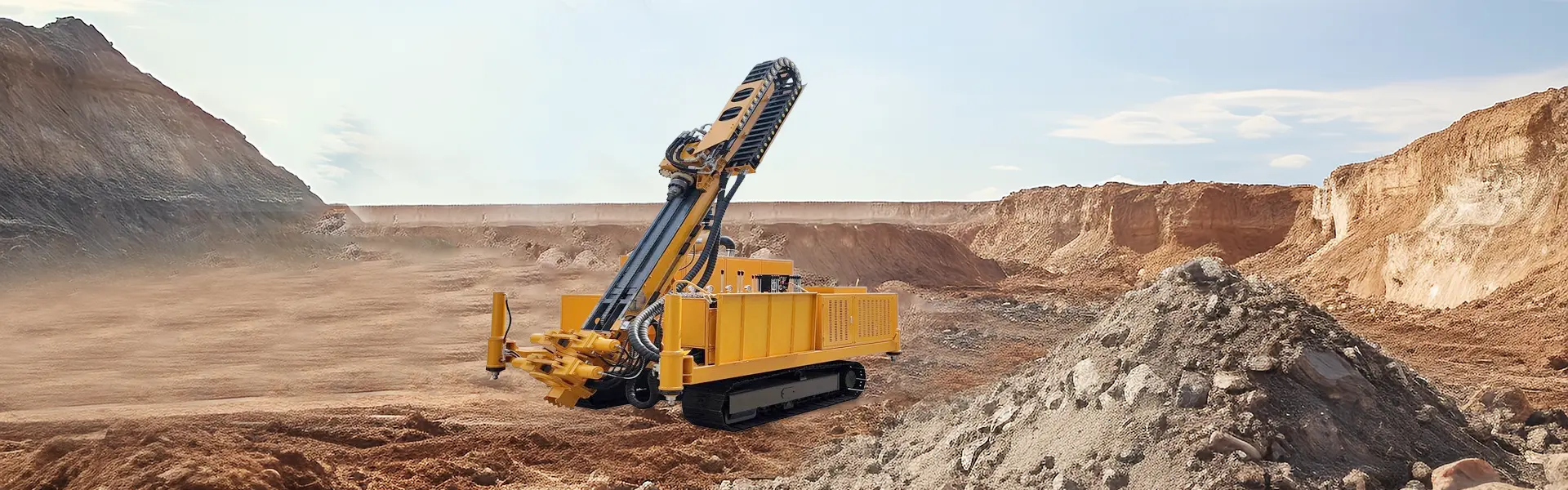
Can a Multi-functional Anchoring Drilling Rig Also Be Used for Grouting?
Can a Multi-functional Anchoring Drilling Rig Also Be Used for Grouting?
In the fields of geotechnical engineering, mining, and tunneling, the demand for efficient and versatile equipment is ever-growing. A common question among engineers and project managers is whether a multi-functional anchoring drilling rig, a cornerstone of modern support operations, can also perform grouting tasks. The answer is a resounding yes, and this capability represents a significant technological evolution. Modern multi-functional drilling rigs are increasingly designed as integrated "drill-anchor-grout" systems, fundamentally transforming workflows in underground construction.
From Sequential Tasks to an Integrated Process
Traditionally, ground support involved a sequential, multi-crew process: one team would drill the hole, another would insert the anchor or bolt, and a third would handle grouting using separate pumps. This method was not only time-consuming and labor-intensive but also logistically complex in the confined spaces typical of tunnels or mines.
The integration of grouting functionality directly into the drilling rig solves these core inefficiencies. As described in a patent for a hydraulic roof bolter, the key lies in the design of the drill rod itself. The rig uses a hollow drill rod with an internal grouting channel. During drilling, this channel remains inactive. Once the target depth is reached, the grouting process can begin immediately through this same channel. In some designs, the drill bit can even split open to allow grout to flow into the annulus around the rod, ensuring the anchor is fully encapsulated and bonded to the rock. This seamless transition from drilling to grouting in a single setup dramatically cuts down operation time.
Technical Advantages of the Combined Function
The technical merits of combining these functions are substantial:
Unmatched Efficiency: The most significant benefit is the drastic reduction in non-productive time. There is no need to demobilize a drill rig and mobilize a separate grouting unit. Projects report efficiency improvements of 40% or more by eliminating equipment changeover and repositioning.
Enhanced Quality Control: Integrated systems offer superior process control. Operators can manage the entire sequence—drilling depth, grout mix, injection pressure, and volume—from a single console. For instance, advanced models feature intelligent control systems that monitor grouting pressure in real-time (e.g., adjustable from 0-15 MPa), ensuring consistent and reliable reinforcement.
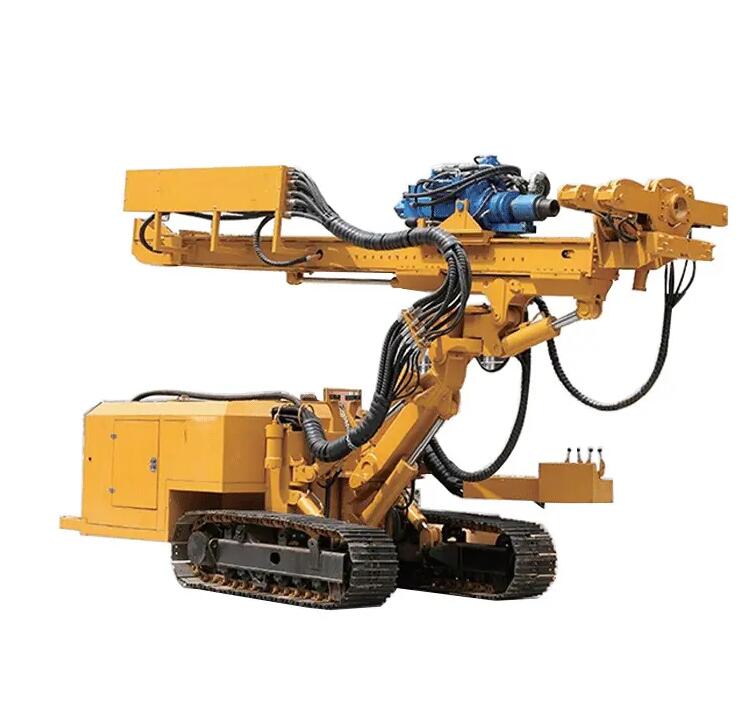
Operational Flexibility and Safety: These rigs are designed for adaptability. They can handle various grouting needs, from standard cement slurry for rock consolidation to more specialized applications. Some rigs are equipped for dual-fluid grouting (e.g., cement and sodium silicate), which is crucial for rapid sealing in water-rich strata. Conducting all operations from a single, stable platform also enhances worker safety by reducing movement and interaction with multiple pieces of equipment in hazardous zones.
Proven Applications in the Field
The application of these multi-functional rigs is widespread across heavy construction and mining:
Tunnel and Metro Construction: They are indispensable for constructing forepoling umbrellas, face bolting, and consolidating weak rock zones ahead of excavation. The ability to perform systematic bolting and immediate grouting is critical for stabilizing tunnels in soft ground or fault zones.
Mining: In coal mines, they are used for roof bolting, strata consolidation, and even coal seam infusion for dust control. The integration of functions is vital in the space-constrained and time-sensitive mining environment.
Slope Stabilization and Foundation Works: For deep foundation pits, landslide mitigation, and dam rehabilitation, these rigs can install long tie-back anchors and simultaneously pressure-grout the surrounding soil to improve load-bearing capacity.
Conclusion and Future Outlook
The evolution of the multi-functional anchoring drill rig into a competent grouting unit is not just a possibility—it is a current industry standard for advanced projects. It embodies the shift towards integrated, mechanized, and intelligent ground support solutions. While dedicated, high-volume grouting pumps still have their place for large-scale curtain grouting, the combined drill-and-grout rig is the tool of choice for the vast majority of structural reinforcement, pre-excavation support, and emergency repair tasks. As engineering challenges grow more complex, the continued convergence of drilling and grouting technologies within a single, digitally-controlled platform will remain a key driver for safety, efficiency, and cost-effectiveness in subsurface construction worldwide.
Send Inquiry



X
We use cookies to offer you a better browsing experience, analyze site traffic and personalize content. By using this site, you agree to our use of cookies.
Privacy Policy