 English
 שפה עברית
  Kurdî
Kurdî  Español
  Português
  русский
  tiếng Việt
  ภาษาไทย
  Malay
Malay  Türkçe
  العربية
  فارسی
فارسی  Burmese
  Français
  日本語
日本語  Deutsch
  Italiano
  Nederlands
  Polski
  한국어
한국어  Svenska
  magyar
  বাংলা ভাষার
  Dansk
Dansk  Suomi
Suomi  हिन्दी
  Pilipino
  Gaeilge
  Indonesia
  Norsk
Norsk  تمل
تمل  český
český  ελληνικά
  український
  Javanese
  தமிழ்
தமிழ்  తెలుగు
  नेपाली
  български
  ລາວ
ລາວ  Latine
  Қазақша
  Euskal
  Azərbaycan
  Slovenský jazyk
  Македонски
  Lietuvos
  Eesti Keel
  Română
  Slovenski

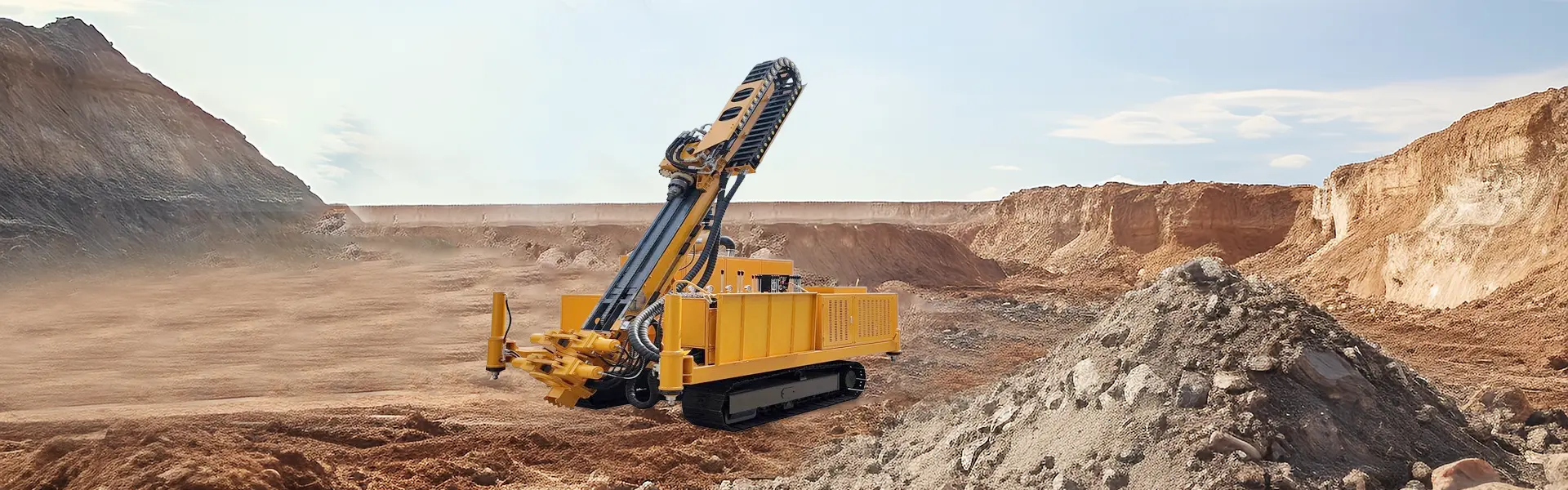
How Does A Top Drive Drilling Rig Drill Faster Than Conventional Rotary Drilling?
Wuxi Ruimai Engineering Machinery Co., Ltd. highlights how a Top Drive Drilling Rig improves drilling speed in complex ground conditions where conventional rotary systems often struggle with efficiency and stability. In modern infrastructure and resource exploration projects, drilling speed is no longer only about engine power—it is increasingly about how effectively torque, impact energy, and hydraulic control are integrated into a continuous working cycle. This shift in engineering thinking explains why top drive systems are gaining attention in a wide range of field operations.
Limitations Observed in Conventional Rotary Drilling
Traditional rotary drilling methods rely on surface-driven rotation transferred through a drill string. While this approach has been widely used for decades, its limitations become apparent in heterogeneous or unstable formations.
In gravel layers or fractured rock zones, torque loss along the drill string can reduce effective cutting force at the bit. When encountering backfill layers or soft-hard interbedded formations, drill string vibration increases, often leading to deviation or temporary stoppages. These interruptions not only slow progress but also increase tool wear.
Another constraint is the difficulty of managing stuck pipe situations. In conventional setups, reversing and freeing a jammed drill string often requires time-consuming manual adjustments. These inefficiencies accumulate, especially in deep or multi-layered drilling environments.
What Changes with a Top Drive System
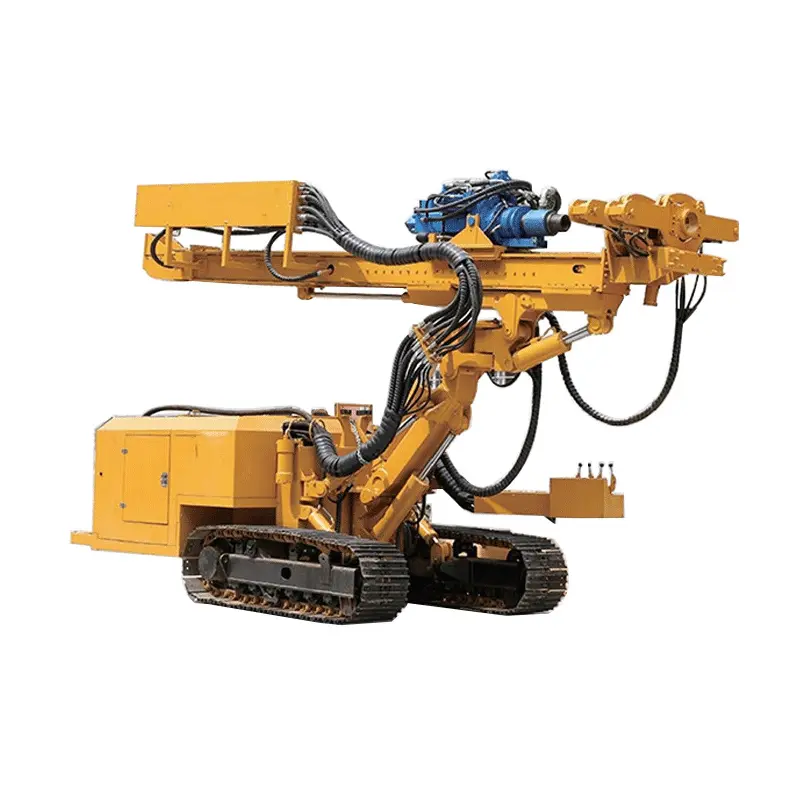
A Top Drive Drilling Rig changes the torque delivery position from the surface table to a hydraulic rotary head mounted on the mast. This structural adjustment may appear simple, but it significantly alters the drilling dynamics.
Instead of rotating the entire drill string from the bottom, torque is applied directly at the top of the drill string. This reduces energy loss and allows continuous rotation while adding or removing pipe sections. The result is smoother operation and fewer interruptions during depth extension.
Direct torque transfer and rotation stability
By eliminating multiple intermediate transmission points, energy loss is reduced. The rotation becomes more stable, particularly in formations with uneven resistance. This stability is one of the key reasons why drilling speed improves in mixed geological conditions.
Reverse impact function in complex formations
Modern systems such as those developed by Wuxi Ruimai Engineering Machinery integrate rotary impact heads capable of reverse impact action. When drill binding occurs, reverse percussion helps loosen the casing and drill rod, reducing downtime caused by stuck tools.
Hydraulic load sensing system optimization
A load-sensing hydraulic system adjusts pump output based on real-time resistance. Instead of operating at constant pressure, energy is distributed dynamically, improving both fuel efficiency and mechanical responsiveness.
Why Drilling Speed Increases in Practice
The speed advantage of a Multi Functional Anchoring Drilling Rig is not derived from a single factor but from combined system improvements.
First, continuous pipe handling allows drilling without frequent shutdowns for rod connection. Second, hydraulic responsiveness ensures that torque is always aligned with formation resistance. Third, improved mast mobility enables multi-angle drilling, reducing the need to reposition the entire machine.
In practical field conditions, these improvements translate into fewer delays during transitions between strata, especially in environments such as:
- Gravel-rich riverbeds
- Collapsed borehole zones
- Deep water well formations
- Mixed soil-rock interfaces
Technical Performance Overview
The following simplified specification overview illustrates how system parameters contribute to overall drilling performance:
| System Component | Specification | Operational Contribution |
| Feed System | Hydraulic cylinder + chain | Stable thrust during deep penetration |
| Feed Stroke | 4000 mm | Extended single-cycle drilling depth |
| Max Torque (Rotary Head) | 15000 N·m | Strong cutting ability in hard formations |
| Impact Frequency | 1800–2400 bpm | Enhanced penetration in fractured rock |
| Clamping Force | 300 kN | Improved pipe stability |
| Max Bore Diameter | 250 mm | Supports large-scale foundation work |
| Max Depth | 80 m | Supports medium-depth geological drilling |
Compared with conventional rotary systems, these parameters support a more continuous energy application model, which directly influences drilling speed consistency.
Mechanisms Behind Faster Drilling Efficiency
The operational efficiency of a Top Drive Drilling Rig is closely linked to how mechanical and hydraulic systems interact.
Continuous rod handling cycle
One of the most time-consuming steps in traditional drilling is pipe connection. Top drive systems allow the drill string to be extended without fully stopping rotation. This reduces idle time and maintains formation stability inside the borehole.
Multi-directional mast adaptability
Through multi-joint linkage structures, the drilling frame can adjust angles for different working conditions. This reduces the need for repeated repositioning of the entire machine, especially in constrained construction sites.
Energy utilization balance
Load-sensitive hydraulic systems ensure that engine output is not wasted under low-resistance conditions. When formation hardness increases, pressure is automatically adjusted, maintaining consistent penetration force.
Field Applications Across Different Environments
The adaptability of top drive systems allows them to operate across a wide range of geological and climatic conditions.
In desert regions, loose sand layers require stable borehole wall support. In high-altitude areas, reduced air density affects engine cooling efficiency, making hydraulic optimization critical. In cold regions, hydraulic stability becomes essential to maintain consistent flow characteristics.
Common application scenarios include:
- Oil and gas exploration drilling
- Water well construction projects
- Geological sampling operations
- Foundation reinforcement and pile engineering
These diverse applications demonstrate that drilling efficiency is not only about speed but also about maintaining stability under varying environmental stress.
Technical Comparison: Conventional vs Top Drive Approach
| Feature | Conventional Rotary Drilling | Top Drive Drilling Rig |
| Torque Transmission | Surface-driven | Direct top-mounted drive |
| Pipe Connection | Frequent interruption | Continuous operation possible |
| Stuck Pipe Handling | Manual intervention required | Reverse impact assistance |
| Energy Efficiency | Moderate loss in transmission | Optimized hydraulic allocation |
| Adaptability to Strata | Limited in complex layers | High adaptability |
| Drilling Continuity | Intermittent | Continuous cycle |
This comparison highlights why drilling performance improvements are often most noticeable in difficult geological formations rather than uniform soil layers.
Operational Adaptability and Safety Considerations
Beyond speed, operational stability is an important factor in drilling system design. Load sensing hydraulic systems help prevent sudden pressure surges, which can affect both equipment longevity and borehole integrity.
Clamping systems with high holding force ensure that drill rods remain stable during impact or reverse rotation. This reduces the risk of slippage in deep drilling scenarios.
Additionally, tracked undercarriages improve ground contact distribution, allowing stable movement across uneven terrain without compromising drilling alignment.
Industry Observations from Field Use
Field observations from different construction environments suggest that drilling efficiency improvements are most visible during transitional geology—where soil layers shift frequently within short depths. In such cases, systems like the Multi Functional Anchoring Drilling Rig maintain consistent rotation and reduce interruption frequency.
Operators often note that the most significant improvement is not only deeper drilling capability, but smoother progression through unstable layers. This reduces cumulative delays across multi-hole drilling projects.
Conclusion
Across varied engineering environments, the integration of hydraulic control, direct torque transmission, and adaptive structural design explains why modern drilling systems achieve higher operational continuity. The Top Drive Drilling Rig represents a shift toward more stable and responsive drilling behavior in complex formations.
Within this context, Wuxi Ruimai Engineering Machinery Co., Ltd. provides drilling equipment solutions such as the HB-500C-based drilling rig series, supporting applications in geological exploration, water well construction, and infrastructure foundation engineering where consistent drilling performance is essential.
Send Inquiry



X
We use cookies to offer you a better browsing experience, analyze site traffic and personalize content. By using this site, you agree to our use of cookies.
Privacy Policy